



Africa’s Spices Are Conquering Global Markets
The global spice trade is booming, and Africa is quickly becoming one of its rising stars.
From ginger farms in Nigeria to turmeric fields in Ghana, African spice exporters are gaining international recognition for their quality, organic cultivation methods, and rich flavour profiles.
In 2026, demand for natural and chemical-free spices continues to rise across Europe, Asia, and North America. This creates a major opportunity for African producers and exporters ready to position their products for international markets.
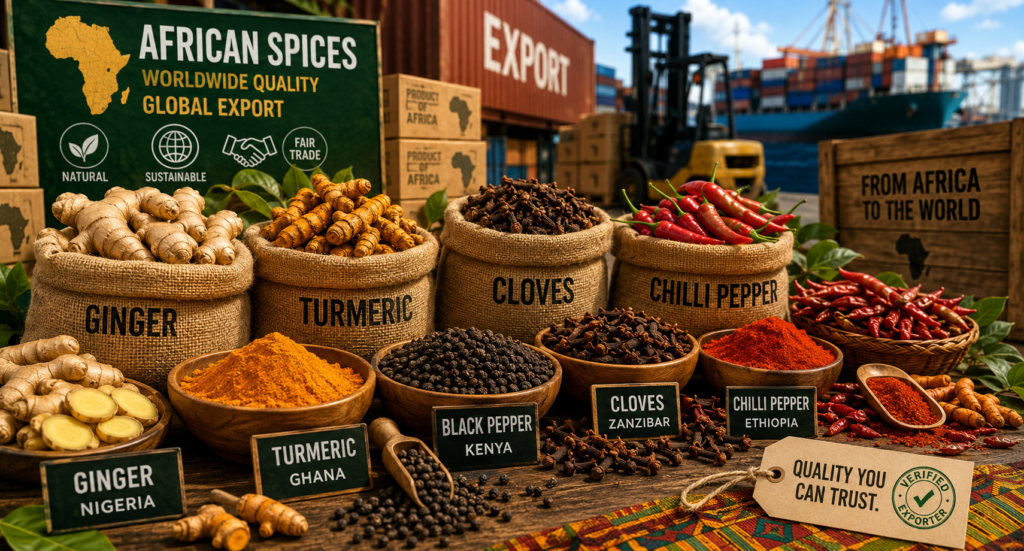
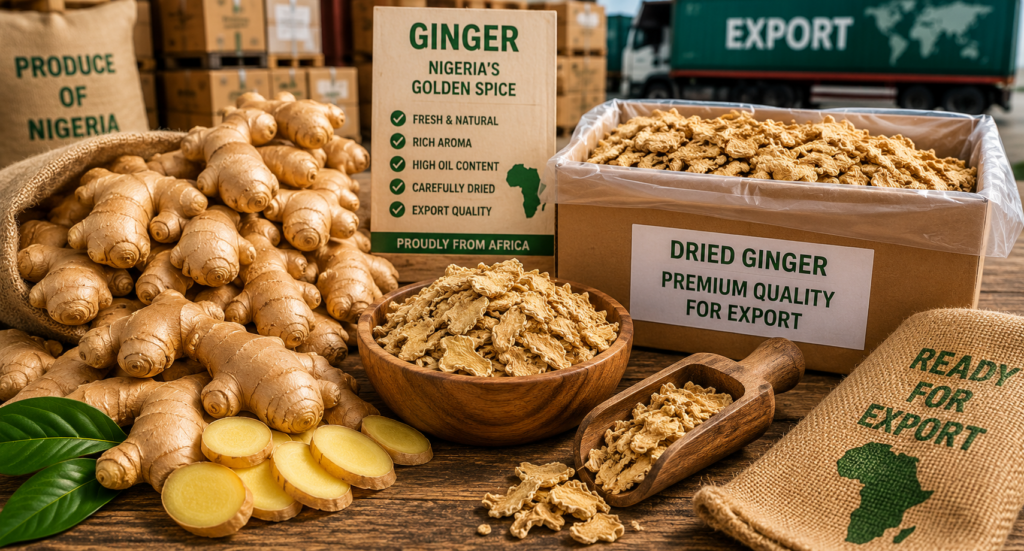
1. Ginger – Nigeria’s Golden Spice
Nigeria remains one of the world’s leading producers of fresh and dried split ginger, particularly from Kaduna, Kano, and Benue States.
Why Buyers Love It
- High oil content and strong aroma
- Suitable for food, beverages, and cosmetics
- Available in fresh, dried, or powdered form
Export Tip
Wash, slice, and sun-dry ginger properly to avoid mould contamination. Use moisture-proof sacks for packaging to maintain freshness during shipping.
Target Export Markets
- United Kingdom
- India
- Germany
- United Arab Emirates
Exporters with verified documentation often receive more buyer enquiries and long-term supply opportunities.
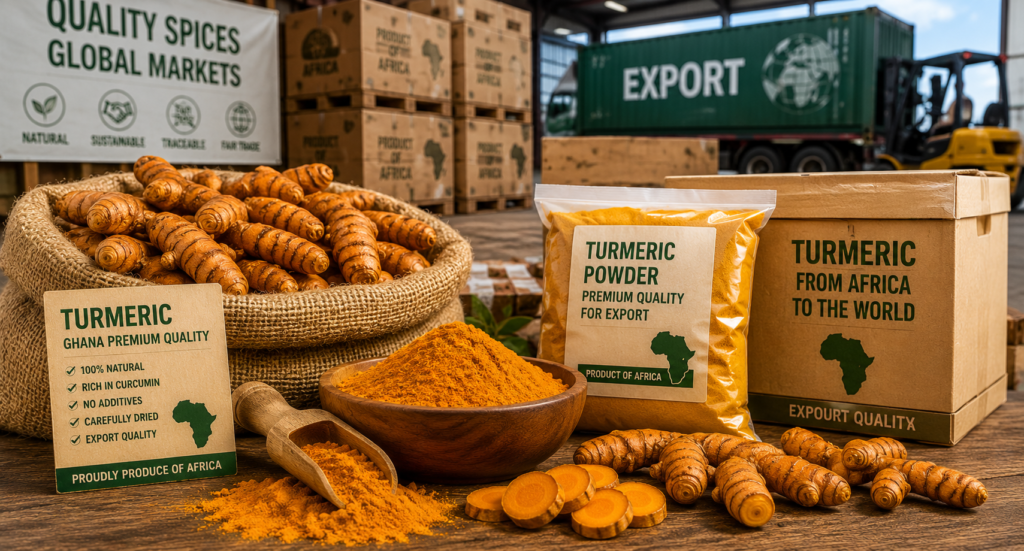
2. Turmeric – Ghana’s Bright Export Opportunity
Turmeric has become one of the most sought-after spices worldwide due to its growing use in health supplements, teas, skincare, and wellness products.
Why Buyers Love It
- Natural anti-inflammatory and antioxidant properties
- Organically cultivated in many West African regions
- Widely used in food, cosmetics, and pharmaceuticals
Export Tip
Exporters can supply turmeric as dried fingers or finely processed powder. Obtaining phytosanitary certification helps improve acceptance in international markets.
Target Export Markets
- United States
- Canada
- Netherlands
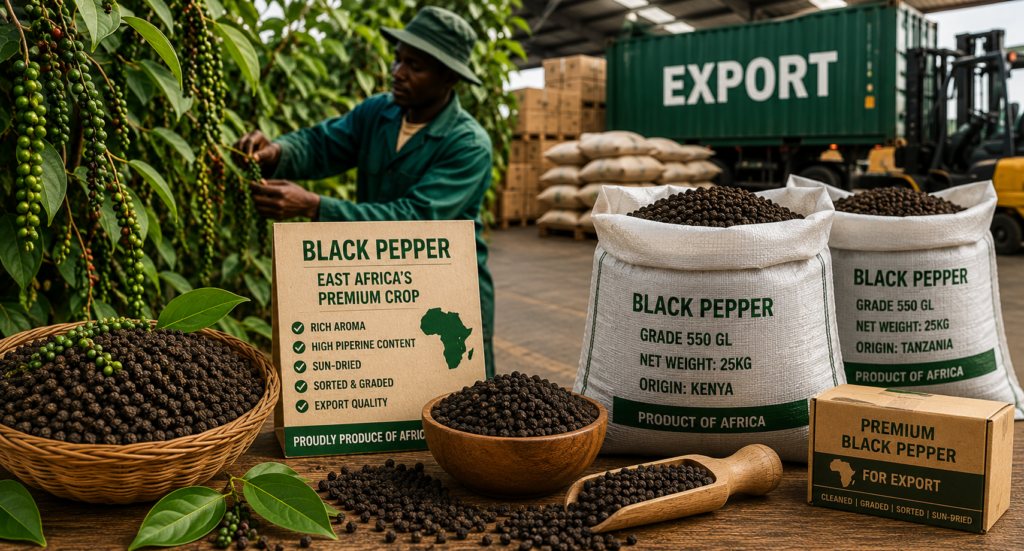
3. Black Pepper – East Africa’s Premium Crop.
Countries like Kenya, Uganda, and Tanzania continue to produce premium-quality black peppercorns with strong flavour and excellent oil content.
Why Buyers Love It
- Rich flavour profile
- Naturally sun-dried with minimal chemical residue
- Suitable for food processing and seasoning industries
Export Tip
Always clean and grade pepper before packing. Use sealed 25–50kg polypropylene bags to preserve freshness during transportation.
Target Export Markets
- France
- Germany
- Poland
- United Kingdom
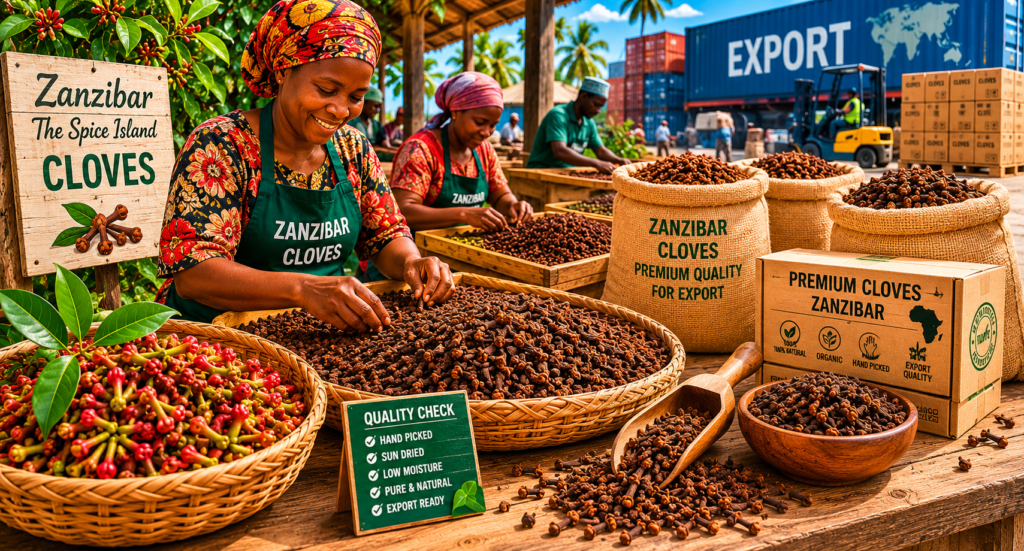
4. Cloves – The Pride of Zanzibar
Zanzibar, often called the “Spice Island,” has remained famous for centuries because of its premium cloves.
Why Buyers Love It
- Distinct aroma used in food, perfumes, and medicine
- Organic and hand-harvested
- Competitive pricing compared to some Asian suppliers
Export Tip
Ensure clove moisture content remains below 12% before export. Jute bags lined with polyethylene help preserve quality.
Target Export Markets
- India
- Indonesia
- Saudi Arabia
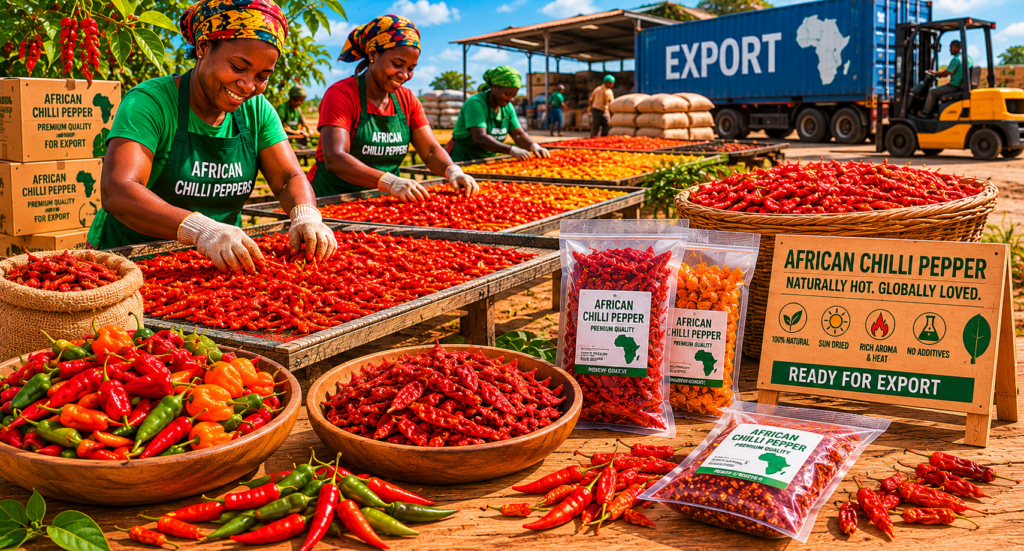
🌶️ 5. Chilli Pepper – The African Heat in Every Dish
From Cameroon to Ethiopia, African chilli peppers continue to gain popularity worldwide.
Demand for African bird’s eye chilli and scotch bonnet varieties has increased significantly in Europe and Asia because of their unique heat and flavour.
Why Buyers Love It
- Naturally spicy and aromatic
- Perfect for sauces, oils, and seasonings
- Available fresh or dried
Export Tip
Dry and package chilli peppers carefully to preserve colour and heat levels. Where possible, provide lab testing results for capsaicin content.
Target Export Markets
- United Kingdom
- China
- South Korea
[Insert Image Here – Colourful African chilli peppers drying under sunlight
📈 Global Spice Market Trends (2025 Snapshot)
| Region | Key Import Needs | Average Import Growth |
|---|---|---|
| Europe | Organic ginger, turmeric, black pepper | +8% annually |
| Middle East | Cloves, chilli pepper | +6% annually |
| North America | Powdered ginger, turmeric | +7% annually |
With increasing consumer awareness around natural ingredients, buyers now prefer verified and traceable suppliers. This gives African exporters a strong competitive advantage when they maintain consistent quality and proper documentation.

Why Join Afroexporterslink.com as a Spice Exporter.
By listing your company on Afroexporterslink.com, you can:
- Reach verified international buyers searching for African spices
- Display certifications such as NAFDAC, SON, HACCP, and organic approvals
- Receive direct buyer enquiries and RFQs
- Build trust through a verified supplier badge
👉 List Your Spice Export Business Now and get discovered by global buyers.
Common Export Mistakes to Avoid.
Many exporters lose opportunities because of avoidable mistakes.
Avoid These Common Problems
- Mixing moisture levels across spice batches
- Using dirty or low-quality packaging sacks
- Failing to obtain lab tests or certifications
- Delayed response time to buyer enquiries
Maintaining hygiene, proper packaging, fast communication, and transparent quality standards can significantly improve export success.
Final Thoughts
Africa’s spice industry is finally receiving the global attention it deserves.
Exporters who stay professional, maintain quality standards, and provide proper verification are already benefiting from rising global demand.
With international buyers actively searching for new suppliers, now is the ideal time to showcase your spice business where it matters most.
